

24 December 2025
How Christmas is celebrated

Candles, decorated trees, festive meals and carols are familiar images, yet the way communities mark the season varies widely across the world. You will find the same human priorities reappearing in very different shapes: coming together, marking a sacred story or a secular celebration, sharing food, exchanging gifts and brightening the darkest weeks with lights and decorations.
Core themes that recur across cultures
Family and community gatherings often sit at the centre of celebrations, whether a quiet evening at home or a large public market. Religious services coexist with secular festivities and local fairs. Seasonal food and shared meals create rituals of their own, and gift giving ranges from modest exchanges to elaborate traditions. Decorations, lights and trees function as focal points for both private and civic observances.
Typical annual timeline
Many places observe a period of preparation in the weeks leading up to the main day, followed by an evening or day of intense family activity. For some countries the central celebration happens on the evening before the calendar date, while others treat Christmas Day as the focal point. Additional holy days or public holidays then extend the season into the following week.
Note on variation and what follows
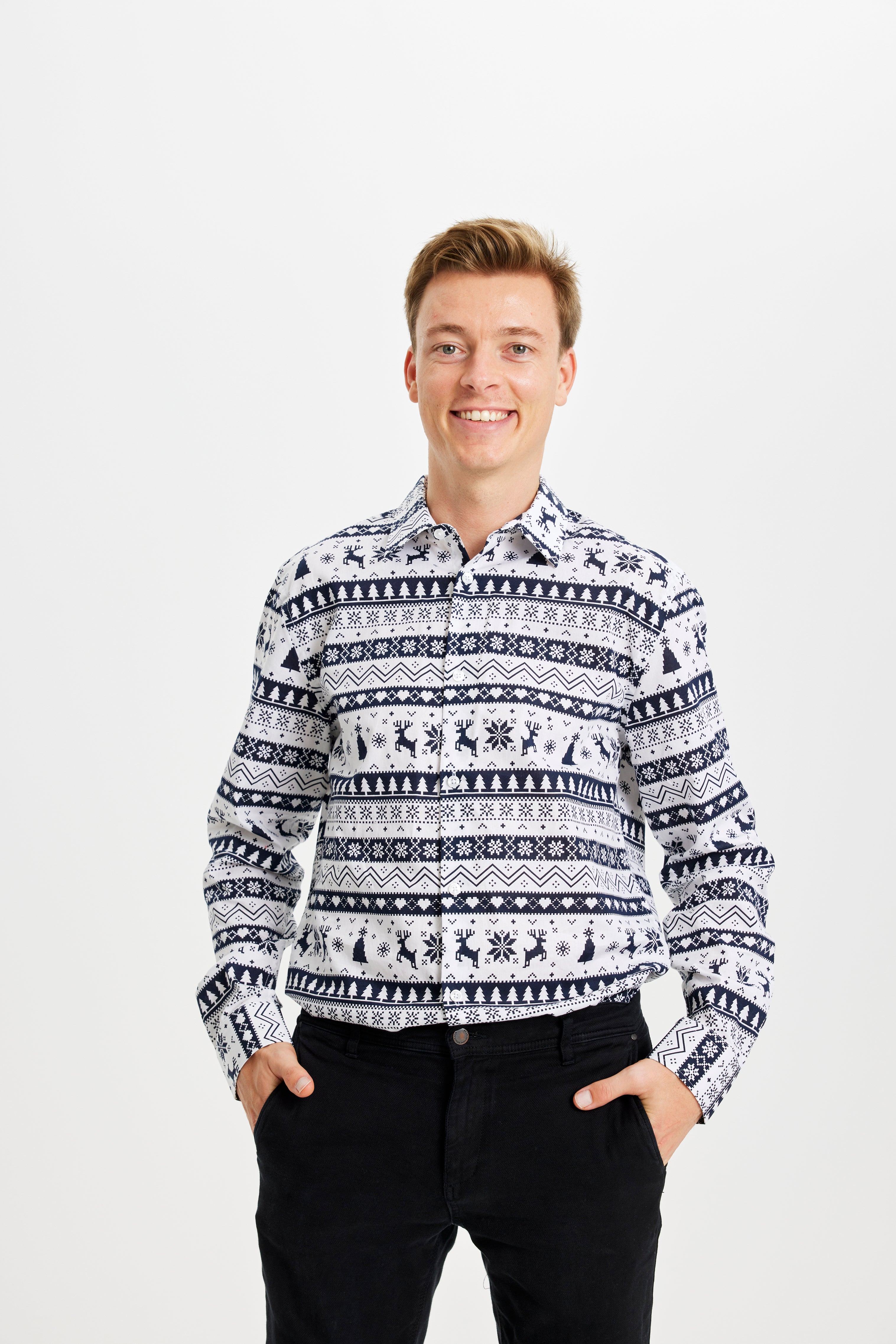
Some regions emphasise church liturgy and nativity plays, others favour communal feasting or market culture, and in many cities the season is mainly a time for shopping and public spectacle. Later parts of this article will offer country snapshots, practical ideas for hosting international style celebrations and a short FAQ. If you plan a cosy evening at home with family, one easy way to nod to local customs is to pick matching outfits like a classic Christmas sweater or coordinated christmas pajamas. For playful gatherings consider an ugly christmas sweater contest or choose an eco option such as a sustainable christmas sweater.
How christmas is celebrated in a Nordic home
Advent marks the slow unfolding of the season and sets the rhythm for family routines. Many households bring out an Advent wreath with four candles and light one more each Sunday as evenings grow shorter. Calendars help count the days, children gather for small rituals, and simple seasonal baking becomes a weekly activity, from round pancake treats to spiced biscuits. These practices create steady pockets of together time in the weeks before the main celebration.
Christmas eve as the focal day
The evening before the calendar date is the main family celebration in many homes, and it follows a familiar pattern. Some families attend an afternoon or evening service where the Christmas Gospel is read and hymns are sung, while others reserve that quiet moment for sitting together at home. The evening programme often begins with a shared meal, moves on to singing, and culminates in the time-honoured circuit around the decorated tree where songs are sung and people hold hands to dance or stroll in a circle. After this communal moment, presents are opened and the focus shifts to children’s delight and family ritual.
Typical festive menu and dessert
Roast meats such as duck, goose or pork appear frequently as the centrepiece of the dinner, accompanied by braised red cabbage, both brown and white potatoes, and a rich gravy. A classic dessert is a cold rice pudding studded with chopped almonds, served with a warm cherry sauce and a single whole almond hidden inside; the finder receives a small prize known as the almond gift. These dishes act as anchors for the evening and often carry sentimental weight across generations.
The days after christmas
The days that follow are social in a different way. Extended family visits, casual lunches and open-smorgasbord gatherings provide chances to meet people you did not see on the evening itself. Informal festive lunches known as julefrokoster bring plates of pickled fish, cold cuts, liver pâté, cheeses and robust accompaniments, and they are important social occasions through December. Work and friend groups frequently arrange such gatherings across the month, so the season remains lively beyond the main night.
Everyday domestic traditions and preparation
Bringing a decorated tree indoors is a central domestic task often timed to a specific evening, and many households use candles, string lights and handmade ornaments to personalise the room. Baking sessions recur throughout December, with small batches of cookies and confections made to share with neighbours or to set out for guests. These chores are practical and social at once: while preparing food and decorations, people talk, plan seating and divide small tasks so the final evening feels effortless.
Clothing and small rituals for a cosy evening
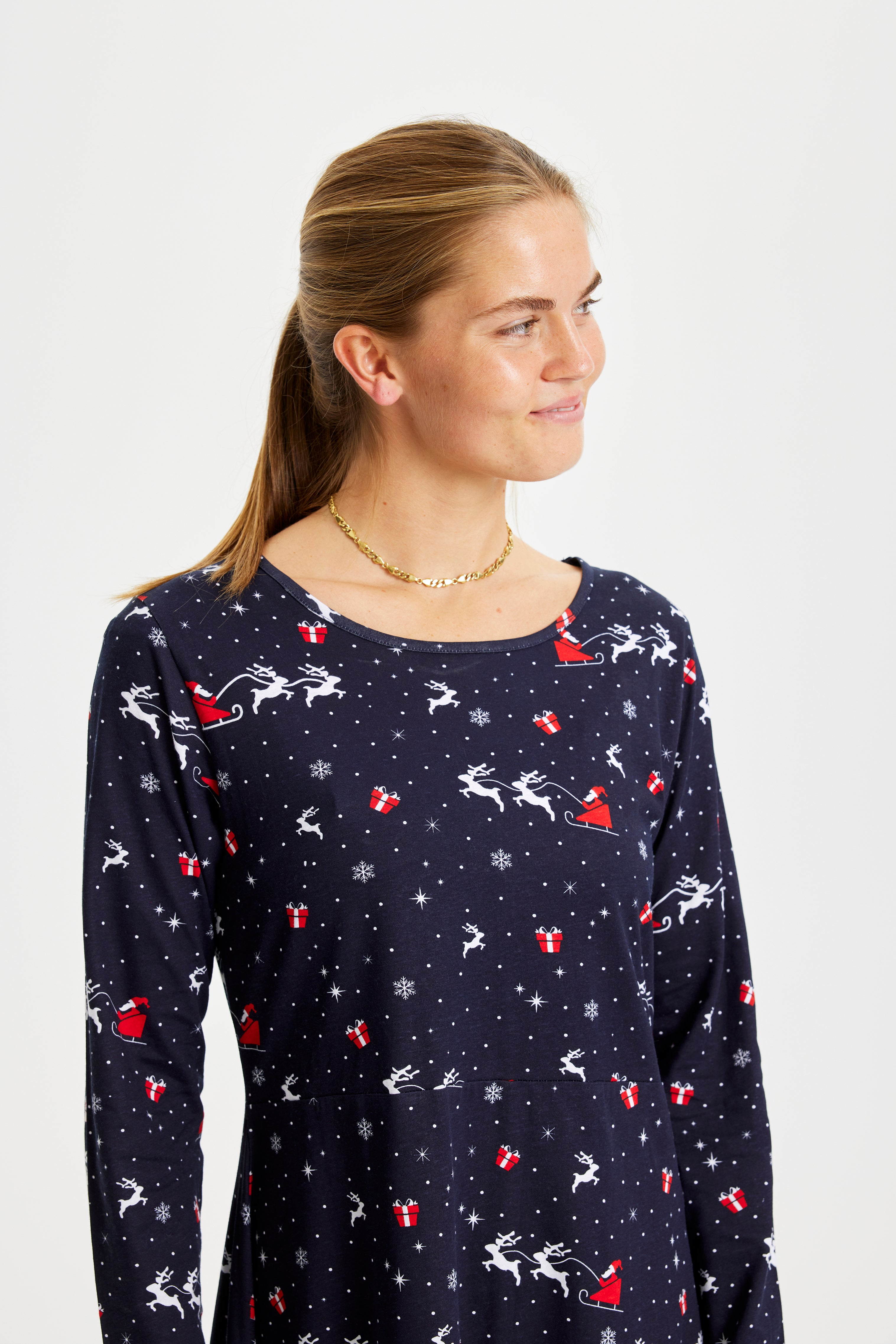
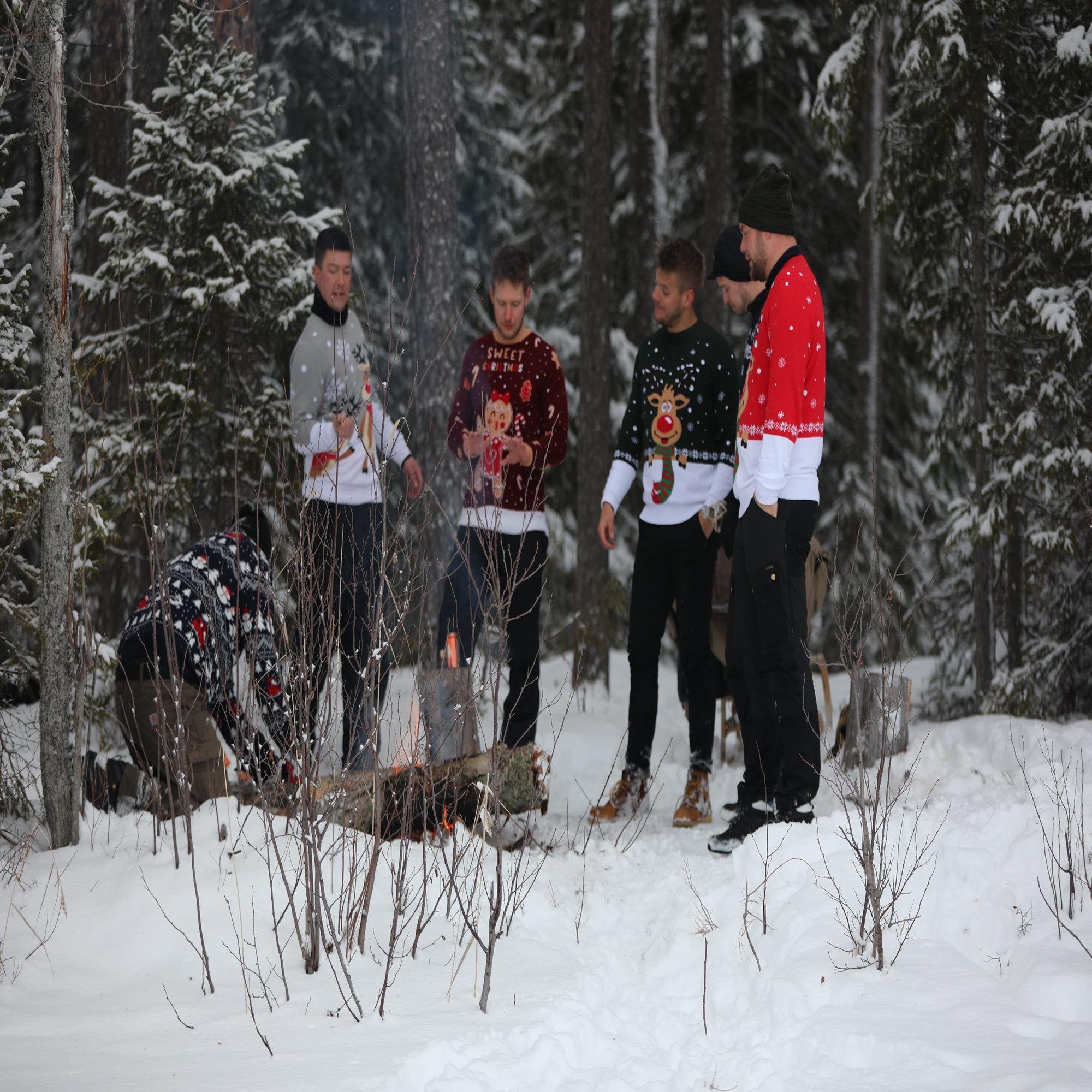
Outfits can help shape the mood without becoming formal. Many families choose coordinated loungewear for a relaxed night in, and themed items such as a festive Christmas sweater are popular for the tree dance and photo moments. For a playful option consider matching christmas pajamas for the whole household or a cheerful jumper for the children, which makes it easy to capture memories and keeps the evening feel unified. If you plan a mixed-age gathering, add subtle accessories like holiday socks or a light-up jumper to invite smiles without changing the meal plan.
Practical tips for hosting
Plan the evening in clear stages: arrival, main meal, singing around the tree and gift time. Prepare side dishes and dessert in advance to limit time spent in the kitchen, and set aside a small assortment of party games or simple carol sheets to help guests join in. A modest focus on continuity and shared tasks makes the event smooth and leaves room for spontaneous moments of delight.
For outfit ideas and small extras consider browsing options for a classic Christmas sweater or coordinated matching christmas pajamas to bring a playful, cohesive touch to your family evening.
How Christmas is celebrated around the world
Across bright city streets and quiet village lanes the season takes many shapes, but similar threads run through the ceremonies: light in the dark, food that fills the table and hands that give and receive. In France the evening feast known as réveillon gathers families for long, savoury plates and rich desserts; in Austria and Alpine regions carols rise from stone churches while local processions add a regional stamp. In Latin America processions and communal parties lead into Epiphany, and in Mexico the nine nights of Las Posadas fill the air with song, the smell of tamales and the crackle of piñatas.
Europe and neighbouring traditions
In many European towns the market stalls glow with warm light, chestnuts roast and mulled wine scents the air. Church services, nativity plays and civic trees set communal rhythms. In some places older midwinter customs survive alongside Christian observance, so you might hear horns in the hills or see masked figures at village parades. The sensory mix is constant: candles guttering, the sound of bells, and the cozy warmth that comes from gathered people and hot plates.
Latin America and Iberia
Processions and long family feasts shape the season in much of Latin America. In Mexico the streets become stages for communal re-enactments, and families prepare tamales that steam through the morning. In Paraguay and parts of Iberia, Three Kings Day carries equal or greater weight than Christmas Day, with extra gifts, sweets and public rituals that extend the season into January.
Asia and the Pacific
Celebrations in the Philippines are famously extended: decorations appear early, dawn or midnight Masses draw devout crowds and fireworks herald long, loud evenings of feasting. In Japan the season is largely secular and playful; in many cities the scent of fried chicken and the bustle of illuminated markets form a surprisingly intimate part of modern customs. Across China, Vietnam and Indonesia small Christian communities keep church vigils while larger urban centres stage spectacular commercial displays.
Other notable customs
Some traditions surprise the senses: early-morning Masses on skates in parts of Venezuela, exuberant fireworks in the Philippines and elaborate nativity scenes across Latin America. North American gatherings tend to emphasise a balance of religious services and domestic spectacle: tree decoration, carols, and long shared dinners that leave the room humming with song and conversation.
If you want to bring a hint of world tradition into your own home, consider small details that multiply atmosphere: a citrus-studded wreath, a pot of spiced fruit simmering, or matching sleepwear for a slow morning. A soft christmas sweater or a set of coordinated christmas pajamas can make the tree dance feel like a shared costume and keep everyone warm while singing or opening presents.
Frequently asked questions
When is Christmas celebrated?
Most countries mark Christmas on 25 December, but many families and nations treat 24 December as the main evening of celebration. Additional days such as 26 December and Epiphany on 6 January remain part of the season in many places.
What is Advent and how is it observed?
Advent is the four-week period before Christmas, observed with anticipation through Advent wreaths, calendars and special services. Families often light one candle per Sunday and keep small weekly customs to mark the passing weeks.
Why do Danes celebrate on 24 December rather than 25 December?
In Denmark the family evening on 24 December is the cultural focal point for meals, tree dancing and gift-giving. Liturgically Christmas Day is 25 December, but popular home traditions centre on the evening before.
What are typical foods at a Danish Christmas?
Common options include roast duck, goose or pork, braised red cabbage, brown and white potatoes, and a cold rice pudding with chopped almonds served with cherry sauce. The almond hidden in the pudding traditionally brings a small prize.
How does religious observance differ between countries?
In predominantly Christian countries church services, midnight Mass and nativity plays are central. In more secular or religiously diverse places the season may focus on lights, markets and family meals rather than formal liturgy.
Are there common elements across most traditions?
Yes: gatherings of family and community, special seasonal foods, decorated trees or lights and practices of giving or sharing appear widely, even when meanings and rituals differ.
Where do modern Christmas trees and decorations come from?
Indoor evergreens and decorated trees emerged from northern and central European customs and became widespread in the 19th century; lights and candles echo older midwinter practices celebrating light in the darkest weeks.
What are some notable non-Western customs?
Examples include Las Posadas in Mexico, prolonged Simbang Gabi in the Philippines and the modern KFC tradition in Japan, each adding local colour to the season.
How widespread is Christmas as a public holiday?
Christmas is observed in many countries around the world, with varying degrees of official recognition and cultural practice; over 150 countries mark the season in some form.
Are there pagan origins to Christmas?
Many festive elements—feasting, lights and seasonal gatherings—trace back to pre-Christian midwinter festivals that were later integrated into Christian observance.
Also view
15 January 2026
Picture a small family movie night by the tree: soft lights, low conversation and a stack of options for christmas movie recommendatio...