


9 January 2026
When do you wish merry christmas?

A simple greeting can mark timing and social boundaries at once. Saying When do you wish merry christmas is often less about the exact date and more about the situation and who you are addressing. In everyday speech the phrase Merry Christmas translates directly to Glædelig jul and functions as a seasonal salutation used in conversation, cards and written messages throughout the holiday period.
Define the phrase
Merry Christmas is an established English seasonal greeting used to acknowledge the Christmas period. In personal settings it signals warmth and familiarity. In business settings it serves as a polite year end courtesy when appropriate for the recipient. The literal translation Glædelig jul may be helpful when you need the equivalent in another language.
When to use it
Use Merry Christmas commonly from early December through Christmas Day when the seasonal context is clear. In informal encounters the phrase works anytime you meet friends or family before the holiday. In written communications aim for mid December to late December for cards and holiday messages. After Christmas many people switch focus to New Year wishes instead.
Where apparel meets timing
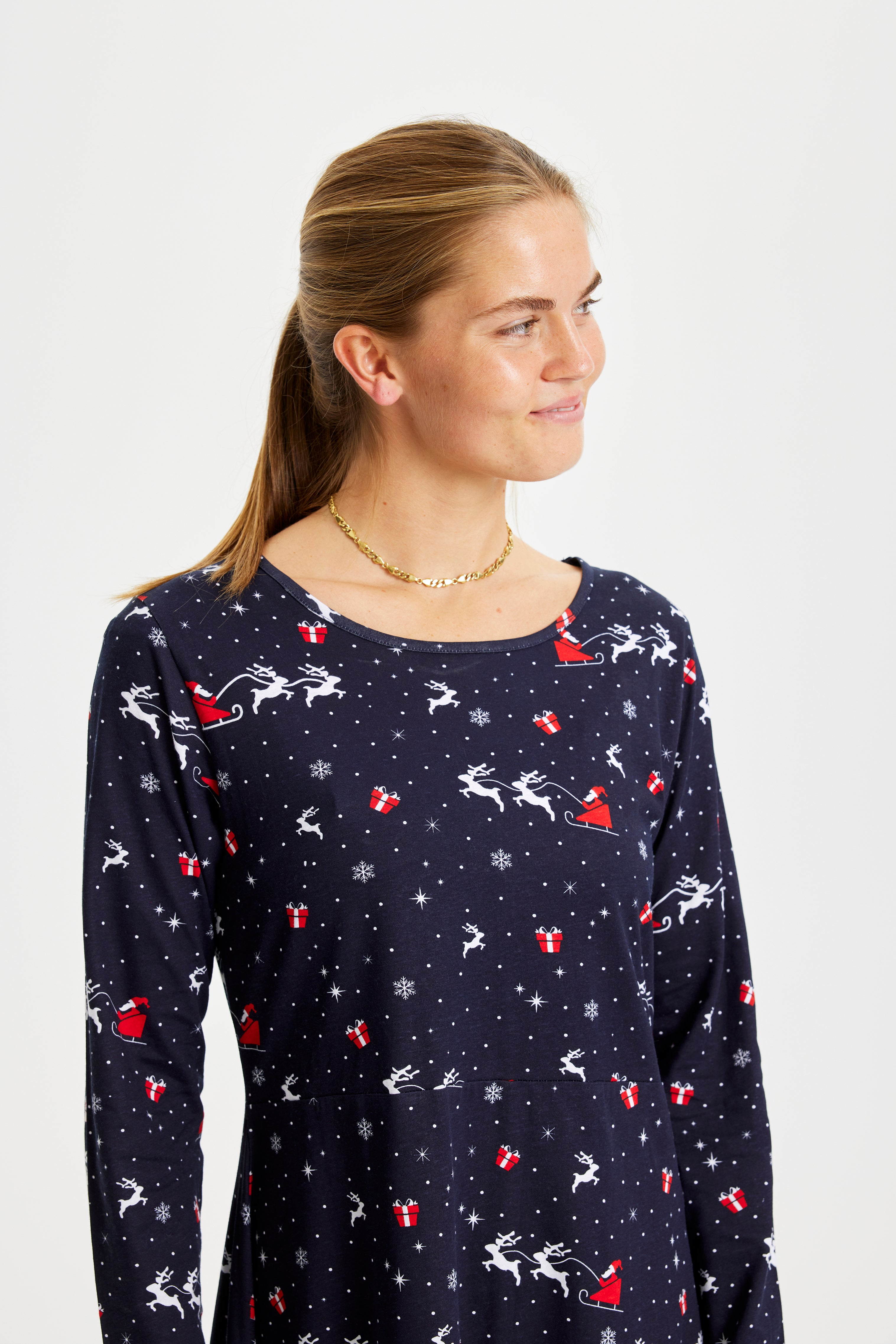
Timing and tone often go together with what you wear at gatherings. For family moments consider coordinating simple looks like a kids Christmas sweater or matching christmas pajamas when you plan to exchange greetings. At playful office events a funny christmas sweater can make a Merry Christmas feel light and inclusive. If you need a straightforward option for varied audiences link to a core christmas sweater collection for quick inspiration.
Practical takeaway
Match language and timing to your recipient and context. For private use early December onward is fine. For business prefer mid to late December and consider adding a New Year message. If you want outfit ideas to match your greeting browse christmas loungewear or mens christmas sweater selections and pick something that suits the occasion.
Exact meaning and usage
Merry Christmas is an established English seasonal salutation used to acknowledge the Christmas period in speech, cards and written messages. The simplest equivalent in Danish is Glædelig jul, and both phrases function as friendly acknowledgements that signal the holiday moment in social exchange. In practice the choice of wording depends on the language of the recipient and the tone you want to strike.
Cultural acceptability and language choice
Using Merry Christmas in a message written in English is widely acceptable. When addressing people who normally use English, that greeting reads as natural and customary. When you switch languages, consider the recipient’s preference: a greeting in their primary language will usually feel more personal. If you expect mixed language audiences, a short bilingual line can remove doubt and keep the tone inclusive.
Evidence from carols and seasonal media
Traditional carols and holiday media repeatedly pair the greeting with the active Christmas season, so cultural cues from music and programming reinforce when the salutation belongs. Because these references are concentrated in December and on Christmas Day itself, they support the common understanding that the greeting belongs to the weeks surrounding the holiday rather than to earlier months.
Practical timing guidelines
For private, informal interactions the greeting is commonly used from early or mid December through Christmas Day. If you meet friends or family during that period, it is perfectly natural to offer Merry Christmas as part of a casual exchange. In formal or business contexts aim to include a holiday message in communications sent in mid to late December, and where appropriate combine Christmas and New Year wishes in a single sentence.
Situational phrasing and channels
In person, a brief Merry Christmas works well when you expect not to see someone again before the holiday. For printed cards and physical greetings it is acceptable to send them anytime during December. In email and newsletters target mid to late December for dedicated holiday messages, and when audiences are diverse consider using neutral alternatives alongside Christmas greetings. On social media timing is flexible, but aligning posts with the main weeks of December makes the message feel timely.
Quick templates and outfit pairing
Short, clear templates help you decide what to write: “Merry Christmas and a Happy New Year” for more formal messages, and “Merry Christmas — enjoy the holidays” for friends. If you want to match tone and clothing, look for a simple Christmas sweater collection to keep things light or choose relaxed options from our christmas loungewear range for home gatherings. Coordinating message and outfit makes the greeting feel deliberate without overcomplicating the moment.
Checklist and brief FAQ
Checklist: Choose the recipient’s language, match tone to the relationship, and aim for mid December onward in written communications. FAQ: Is it ever too early to say Merry Christmas? Generally yes if it is clearly before December; many people reserve the phrase for the month of December and the immediate holiday days. When should you switch focus to New Year? After Christmas Day or during the days between December 26 and December 31 most year-end messages shift emphasis to New Year wishes.
Practical phrasing and examples
When you choose words for a seasonal greeting, think of the moment: the scent of pine in the hallway, the warmth from a thick knit against your skin, the soft hum of Christmas music in the background. For private, informal exchanges a short Merry Christmas works perfectly. For a slightly warmer message you can add a small wish for calm and good company, for example: Merry Christmas. Enjoy a peaceful holiday with family and friends.
In more formal or business contexts lengthen the line gently, and combine Christmas with New Year wishes to cover year-end sentiments. Try: Merry Christmas and a Happy New Year, or Wishing you a Merry Christmas and much success in the year ahead. If you prefer to respect local language, include the Danish equivalent Glædelig jul alongside the English greeting for clarity.
Pairing words with a look helps too. After a day of wrapping gifts or hanging lights, slipping into a soft Christmas sweater feels like part of the tradition, and it makes in-person greetings feel cozy. For quieter evenings at home, a set of christmas pajamas adds warmth and ease while you write cards or post a seasonal message on social media.
Examples by channel
Email sign-off for customers: Merry Christmas and a Happy New Year. Best regards, [Name/Company].
Short social post: Merry Christmas to everyone, may your home be full of scent of baking and laughter.
Card message for neighbours: Wishing you a Merry Christmas and many good moments around the table.
Colleague greeting in the office: Merry Christmas, see you refreshed after the holidays.
Etiquette checklist
Tip: Ask yourself three quick questions before you hit send. First, What language does the recipient prefer? Second, Is the tone formal or informal? Third, Is the audience diverse and perhaps better served by a neutral line such as Happy Holidays?
Timing rule of thumb: Private greetings are fine from early December onward. Business communications fit best in mid to late December, and messages after December 25 often shift to New Year wishes.
Formatting tips for variety
Keep greetings short in conversation, expand gently in written form, and when writing for a broad audience combine Christmas and New Year wishes to include everyone. Tip: Use a single sentence for sign-offs, and a two-line message when you want a slightly more personal tone. Remember to match message length to the channel, whether a quick in-person exchange or a printed card kept on the mantel.
There is a simple joy in matching words to sensory moments. Imagine the crackle of paper, the smell of fresh baking, the warmth of a knit jumper as you walk from room to room saying your seasonal greetings. Let your phrasing mirror that calm, and the message will feel natural rather than formal. If you need a cozy option to wear while you prepare cards, consider browsing our christmas sweater selection or a pair of christmas pajamas for relaxed evenings at home.
Frequently asked questions
When is it customary to say Merry Christmas?
Customarily during the Christmas season, most commonly from early to mid December through Christmas Day, and sometimes until the end of the year depending on context.
Is it appropriate to say Merry Christmas in Denmark?
Yes, it is understood. For Danish recipients Glædelig jul remains the traditional choice, but a short bilingual greeting is a polite alternative for mixed audiences.
Can I use Merry Christmas in business emails?
Yes, particularly with international contacts. In Danish business settings consider using Glædelig jul or a bilingual line to match expectations.
When should I switch to New Year wishes?
Many switch after December 25, and most year-end communications combine both or move emphasis to New Year wishes between December 26 and December 31.
Also view

15 January 2026
Picture a small family movie night by the tree: soft lights, low conversation and a stack of options for christmas movie recommendatio...