


9 November 2025
Who invented Christmas?

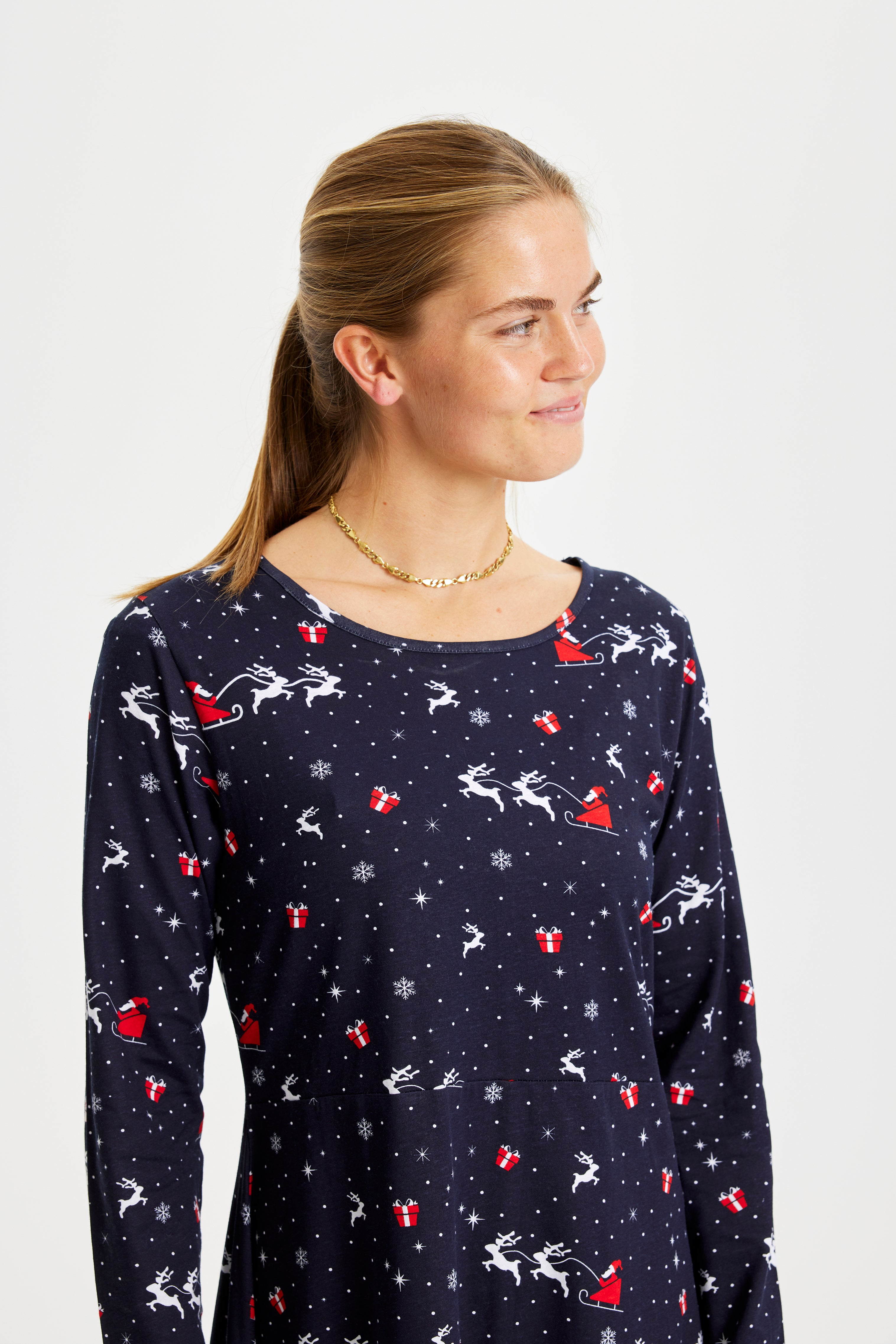
Who invented Christmas? You might expect a single name, but the holiday you know today is the result of many layers: ancient midwinter feasts, Roman festival dates, and later Christian liturgy. In modern life the celebration shows up as rituals and clothing you recognise, whether you cosy up in a classic Christmas sweater or share matching Christmas pajamas with the family.
Short answer
- No single person invented Christmas; it evolved over centuries from a mix of pre Christian winter festivals and later Christian observances.
- The English name Christmas literally means Christ’s Mass and reflects the Christian liturgical layer added to older seasonal celebrations.
Quick timeline
- Prehistoric and early historic periods: northern communities marked midwinter with feasting and ritual practices often called Yule or jól.
- Roman imperial period in the 3rd and 4th centuries: winter festivals such as Sol Invictus and calendar arrangements provided a public festive season.
- Late antiquity and early medieval centuries: Christian leaders fixed an annual Nativity feast on 25 December and local customs blended with church observance.
- Early modern to 19th century: many of the visible modern customs emerged, from decorated trees to popular gift giving and themed garments like the ugly Christmas sweater.
Preview of themes
This article will trace origins in pre Christian Yule and Roman timing, explain why 25 December was chosen, outline the linguistic history of Christmas, and note how later cultural developments shaped the traditions you recognise today, including festive apparel such as the ugly Christmas sweater.
Religious and liturgical origins
Early Christian communities focused on the passion and resurrection of Jesus rather than on his birth, so an annual celebration of the Nativity did not appear immediately. Over time a distinct feast day developed as church calendars expanded to mark key moments in the life of Christ. By the fourth century a formal observance of the Nativity on December 25 had taken shape within many Christian centres, turning a set of local commemorations into a recurring liturgical event.
Sol Invictus and imperial influence
The Roman imperial calendar already contained winter festivals that celebrated light and renewal. Emperor Aurelian promoted Sol Invictus as a unifying solar cult in the late third century, and public festivities around the winter months created a ready-made slot in the civic year for communal celebration. Christian leaders and communities placed the Nativity within that seasonal frame, which made it easier to integrate a new feast into familiar rhythms of public life and ritual.
Etymology and linguistic traces
The English name Christmas is a compound of Christ and Mass, literally meaning Christ’s Mass, which highlights the feast’s liturgical origin as a mass dedicated to Jesus. In many northern tongues the old midwinter name survives as well. Words like Yule and related Old Norse and Old English forms point to a parallel vocabulary that emphasised a separate set of seasonal customs alongside the church’s observance.
Pre‑Christian nordic and germanic traditions
Long before the Nativity appeared on church calendars, communities in northern Europe marked midwinter with gatherings centred on feasting, hospitality and seasonal rites. Sources from later centuries refer to wintertime assemblies called Yule or jól, where ale, shared meals and reciprocal gift giving were prominent. Mythic figures and household traditions were woven into those festivities, and several practices later reappeared within Christianised midwinter celebrations.
How traditions merged
The process that produced the holiday many people recognise today was gradual and local. As Christianity spread, clergy and laypeople negotiated which customs could be retained and which had to be reframed. In some places the church emphasised the Nativity while allowing older forms of feasting to continue under new theological language. In other areas local names and practices persisted alongside liturgical observance, producing a patchwork of customs rather than a single uniform celebration.
Evidence and documentary traces
Surviving records show that a regular annual celebration of the Nativity became more prominent from the fourth century onward, while archaeological finds and later textual references point to earlier midwinter feasting in northern Europe. The uneven nature of the sources explains why scholarly accounts describe the holiday as layered: liturgical documentation, civic festival calendars and vernacular traditions together reveal how the date, name and many practices came to coalesce over centuries.
Modern echoes in festive apparel
Today many of those layered meanings show up in seasonal clothing and accessories that blend sacred and secular cues. People signal participation in a winter celebration with garments such as the Christmas sweater or with coordinated sleepwear at family gatherings. For those looking for matching sets, the site offers a broad selection of christmas pajamas and a range of styles centred on the classic christmas sweater, which echo how communal ritual and everyday fashion have come together.
Who invented Christmas? medieval to early modern shifts
By the medieval centuries the calendar of church feasts had room for many local customs. Parish streets rang with bells and markets filled with the scent of pine and baked goods, while households kept alive older seasonal traditions alongside liturgy. In many regions communal feasting remained central, and the church often allowed popular customs to continue so long as they could be given a Christian meaning. That slow layering is why no single person can be named as the inventor of the holiday you know today.
Medieval blending of church and folk tradition
Across Europe local observances varied widely. Some parishes emphasized midnight mass and nativity plays as the focus of the day, while elsewhere the rhythm of work, feast and gift exchange reflected older cycles tied to the winter season. Words like Yule survived in northern lands as a name for the midwinter celebration, even as Latin and English speakers used the term Christmas to refer to Christ’s Mass. The result was a tapestry where liturgical and popular elements coexisted, each adding texture to the season.
Emergence of modern customs
What feels like modern Christmas—decorated trees, public carols, seasonal markets and an emphasis on home comforts—took shape over the early modern and nineteenth centuries. The decorated tree in northern Europe moved from private German parlors into wider Danish and British life in the early 1800s, with the first documented Christmas trees in Denmark appearing around 1808 to 1811. Streets and parlors filled with light, and the symbolism of returning brightness after the darkest months echoed older themes of renewal.
The growth of gift giving and decorated homes also followed broader social changes: urban markets, printed images, and domestic fashions made seasonal goods more visible. Commercial forms of celebration emerged gradually, not from one inventor but from merchants, artists and households adapting older customs to new tastes. Even today a Christmas sweater worn while hanging ornaments or a set of christmas pajamas for a cosy evening shows how dress can be part of the celebration rather than its origin.
Regional survivals and names
In northern regions the word Yule continued to appear in folk songs and seasonal sayings, preserving a linguistic link to pre Christian midwinter feasts. In Anglican and continental contexts the term Christmas became dominant in formal speech, while many local customs kept their distinct flavour. The persistence of both names illustrates how the festival spread and adapted rather than being invented wholesale.
Distinct origins in a few short lines
- Name Christmas: Christian liturgy and the mass celebrating Christ.
- Midwinter feasting and Yule practices: pre Christian northern traditions emphasising hospitality and abundance.
- Date 25 December: a fourth century liturgical decision shaped by existing Roman festival timing.
- Christmas tree: early 19th century Central European custom that spread north into Denmark and Britain.
Practical comforts remain part of the story. The smell of pine from a fresh tree, the warmth of a knitted jumper, and the soft crackle of a fire are modern traces of older meanings. Slip into a comfortable christmas sweater when you bring out ornaments, or curl up after decorating in matching christmas pajamas to enjoy the glow and the music. These garments are part of how communities mark the season, not the cause of it.
Frequently asked questions
Who invented Christmas?
No single person invented Christmas. The holiday developed over centuries through the blending of pre Christian midwinter festivals, Roman winter celebrations, and later Christian liturgical adoption of 25 December.
Why is Christmas on December 25?
The date was fixed in church practice by the fourth century. It aligns with winter festival timing and carries symbolic associations with returning light after the solstice.
Did the Romans invent Christmas?
Romans did not invent Christmas, but Roman festivals such as Sol Invictus and the civic calendar influenced when and how winter celebrations took place, and Christian leaders used those temporal markers when establishing the Nativity feast.
What is Yule and how is it related to Christmas?
Yule was a pre Christian midwinter feast in northern Europe centred on feasting, hospitality and communal exchange. Many Yule customs were absorbed into later midwinter celebrations as communities became Christianised.
When did the Christmas tree become common in Denmark and northern Europe?
Documented instances of decorated trees in Denmark appear around 1808 to 1811, following earlier Central European customs. Widespread adoption across northern Europe unfolded through the nineteenth century.
Also view
15 January 2026
Picture a small family movie night by the tree: soft lights, low conversation and a stack of options for christmas movie recommendatio...