



3 December 2025
Unique Christmas traditions to try this year

Familiar holiday routines have their place, but trying a few unique Christmas traditions can refresh the season and invite new ways to connect with family and friends. A small shift in timing, an unexpected activity, or a playful garment can turn a regular evening into something your household looks forward to repeating.
Definition of unique traditions
Unique Christmas traditions are practices that deviate from mainstream rituals, adapt older customs for a modern household, or blend elements from different cultures into a repeatable habit. They need not be elaborate: a weekly evening game, an alternative dessert shared on a set date, or a textile ritual can qualify so long as it is intentionally repeated and meaningful to those involved.
Categories to explore
Food and communal meals: Consider regional dishes or alternative desserts that invite participation rather than passive consumption. Shared preparation is as important as the menu; choose a recipe that lets several people take on simple roles.
Home rituals and décor: Handmade ornaments, natural elements, and small candle customs that are timed or limited to specific evenings create visual markers in the season without overwhelming the household.
Family activities and games: Timed rituals, interactive gift formats, and short, repeatable games reduce decision fatigue and make gatherings more predictable. A package game using a lighthearted competitive element or a countdown of tiny daily activities keeps everyone engaged.
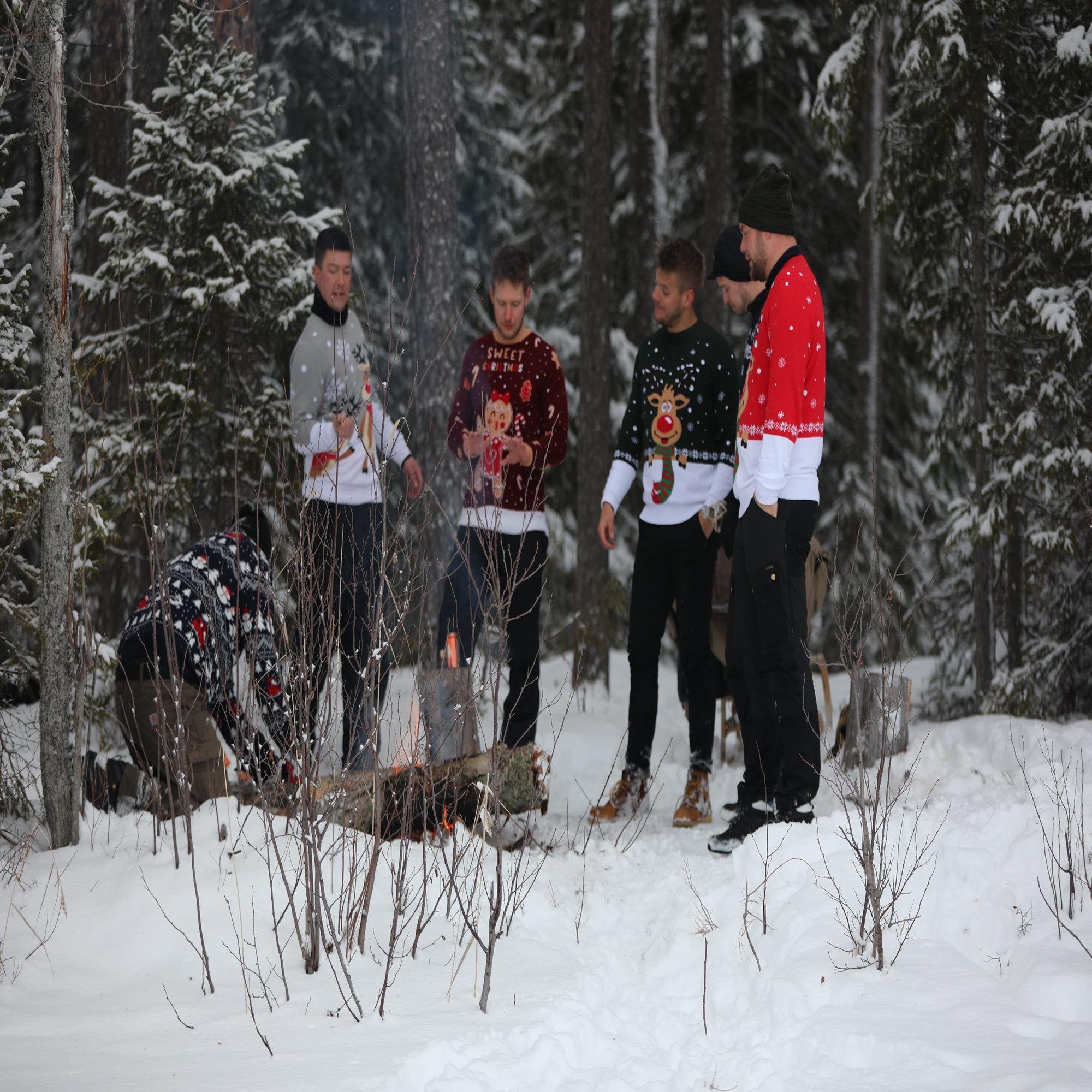
Textile and clothing traditions: Designating an evening for coordinated festive knitwear or matching loungewear makes for relaxed portraits and shared moments. You might reserve one morning for children to wear a kids Christmas sweater while opening a small family gift, or introduce a humorous round with an ugly Christmas sweater for a party segment. For households mindful of impact, adopting a sustainable Christmas sweater or choosing reusable festive loungewear keeps the ritual intentional.
Historical and craft-based customs: Reviving a single handcrafted ornament technique or setting aside time to repair and reuse older decorations places emphasis on craft skills and continuity without requiring expert knowledge.
Why try a new tradition
Adding a novel tradition brings variety to the seasonal rhythm, opens simple ways to include different generations, and can support sustainable choices. Start small, pick consistent timing, and invite participation so the practice feels natural rather than burdensome.
How this selection is organized
The ideas that follow are grouped by timing—pre-December, Advent, Christmas Eve and day, and post-Christmas—and by type: food, décor, activities, textiles, and craft. That structure helps you choose one fresh element to try this year and adapt it across future seasons.
Pre-December rituals
Late November is a practical moment to introduce small rituals that soften the transition into the holiday month. Prepare an advent arrangement with a clear lighting schedule so everyone knows which evenings are reserved for candle time. Bake doughs that can be portioned and frozen for later, such as spiced biscuit dough or simple sugar cookie dough, so busy days still yield a homemade touch. Use a shared calendar to plan two or three casual gatherings early in December, so lunchtimes and evenings feel intentionally set aside without last-minute organising.
Advent and calendar customs
Advent lends itself to daily markers that require little effort but create a steady rhythm. A weekly candle ritual can be simple: place four candles in a low, stable wreath and light one more each Sunday of Advent while someone reads a short line or sings a single verse. Advent calendars can range from modest paper windows to a small-gift calendar for adults; choose a format that fits the household and keep gifting modest to maintain the calendar as a marker rather than a shopping task. Timed family activities work well here: prepare a list of short items such as reading a poem, making a paper ornament, or a five-minute game to relieve decision fatigue later in December.
Christmas Eve and main celebration practices
On the main evening, gatherings often centre on shared meals and collective moments. Dancing or singing around the tree can be a five- to ten-minute interlude after the main course, a predictable pause that brings people together without feeling staged. Typical holiday menus vary, but include one communal dish that several people help prepare and one dessert that becomes a shared ritual, for example a rice pudding-style treat with a small token hidden for one person. Package games and structured gift formats provide a playful social rhythm; set simple rules beforehand so everyone understands turns, swapping, and any lighthearted penalties.
Textile and aesthetic customs
Clothing often signals a change in pace. Designate one evening for matching festive knitwear or coordinated loungewear to create relaxed portraits and a sense of unity. If you prefer a playful touch, plan a short moment for an ugly Christmas sweater or an LED style for laughs and photos. For quieter gatherings, matching christmas loungewear offers comfort and a visual thread through the day. Consider including a kids christmas sweater moment during a morning gift opening to make a child-focused ritual that scales easily across ages.
Simple DIY: Make an advent wreath
An advent wreath is practical to assemble and adapts to many aesthetics. Choose a low base so candles sit away from hanging greenery and keep the design compact to reduce fire risk.
Materials- Low heat-resistant tray or ring
- Four pillar or votive candles
- Greenery clippings or decorative alternatives
- Floral wire or ribbon to secure elements
- Place the tray or ring on a stable surface and arrange the candles evenly.
- Secure greenery around the base, leaving the candle holders clear of foliage.
- Test stability by nudging gently and adjust until secure.
- Set a lighting schedule and an agreed place for the wreath to avoid accidental knocks.
Use non-flammable decorative accents for households with young children or pets and keep a small extinguisher nearby while candles are lit.
Timing and logistics
Begin preparations in late November for easy crafts and baking, and allow one to three hours for small wreaths or a batch of dough. Simple materials checklists help: candles, a base for wreaths, basic tools such as scissors and wire, and labelled storage for edible ornaments. Scale activities by letting children handle simple tasks and assigning adults brief, supervised roles to include older family members without creating heavy work.
FAQ
What counts as a unique Christmas tradition?
Practices that are uncommon locally, revive older customs, combine elements from different cultures, or are newly invented and repeated annually.
How can a household start a new tradition without adding stress?
Choose low-preparation activities, set predictable timing, involve multiple household members, and begin with a trial season so you can adjust the scope.
Are there safety considerations for candle-based rituals?
Yes. Place candles on stable, heat-resistant surfaces away from flammable materials, never leave them unattended, and follow local fire-safety guidelines.
How do textile traditions fit into holiday practice?
Festive knitwear and coordinated loungewear act as communal dress markers, visual anchors for rituals, and easy themes for photos. For inspiration, see options for a classic christmas sweater and matching christmas loungewear collections to plan a themed evening that feels intentional without pressure.
Concrete tradition ideas to try this year
As the scent of pine fills the home and soft carols set a steady tempo, small changes can create memorable nights. Below are practical, repeatable ideas you can introduce this season. Each suggestion focuses on sensory detail and gentle timing so the new tradition becomes part of the household rhythm rather than an extra task. Picture the warm weight of a knitted sleeve, the crackle of candles, and the smell of fresh baking as you read.
Revive a vintage decoration method
Choose one historic ornament technique and make a series to mark the year. Paper cutting, simple wooden carvings, or dated glass baubles work well. Make time for a single evening to create several pieces so the activity fits a busy calendar. Store finished ornaments carefully and place one on the tree each year to build a small, tangible timeline of moments.
Adopt an Advent candle schedule
Set a clear lighting plan for Advent with one short action each week: light one more candle, sing a verse, or read a two-line poem. Keep the ritual under ten minutes. The steady progression of light becomes a visible marker of time and invites quiet company rather than performance. Make the candle area safe and low to the surface so the warmth from the glow is felt, not feared.
Host a themed communal meal
Pick a lesser-known regional dish and introduce it with a short anecdote about where it comes from. Let the aroma of slow cooking fill the house and make room on the table for shared tasks like plating or garnishing. Encourage relaxed dress, perhaps wrapping up in a cozy christmas sweater to underline the evening’s warmth and ease.
Start a textile evening
Designate one night for coordinated festive knitwear or matching loungewear to create a soft visual theme for photos and conversation. The warmth from knitting or layered fabric adds a tactile comfort to the room, and the simple act of choosing outfits together becomes part of the memory without pressure to perform.
Create a daily micro-activity calendar
Prepare 24 small cards, one for each December day, with five-minute items: listen to a song, read a short story excerpt, make a paper star, or sketch a winter scene. These tiny markers preserve space for calm moments and reduce decision fatigue when the season grows busy. Keep the activities simple so they are easy to repeat in future years.
Combine baking and ornamentation
Bake durable shapes intended for hanging, and consider food-safety and storage. If the pieces are meant to be eaten later, store them in airtight tins. For long-lasting keepsakes, bake with nonperishable dough recipes or use painted clay alternatives to capture the same scent and shape without spoilage.
Introduce a lighthearted package game
Create a timed gift exchange with clear rules and a short bell or timer. Use small, amusing items to focus on shared laughter rather than value. The rotation and swapping encourage conversation and create a playful tempo to the evening.
Implement a sustainable tradition
Repair and reuse older decorations, swap items with neighbours, or make pieces from natural compostable materials. A repair evening can be quietly satisfying: the scent of glue, the soft thrum of a needle, and the warmth from a favourite sweater as you work together.
Timing and logistics
Begin preparations in late November for wreaths and simple batches of dough. Allow one to three hours for small crafts and plan no more than two new activities in the first season. Materials lists can be small: candles, sturdy base for wreaths, basic scissors, string for baked ornaments. For candle safety, always choose stable holders and keep a safe distance from flammable décor.
Regional and cultural sensitivity
Acknowledge where a tradition comes from and adapt it with respect. Local variants might change ingredients, decorative styles, or musical choices. When borrowing a practice, share its origin and make any adaptations transparent to honour its provenance while fitting it into your household’s season.
Frequently asked questions
What counts as a unique Christmas tradition?
Practices that are uncommon locally, revive older customs, combine elements from different cultures, or are newly invented and repeated annually.
How can a household start a new tradition without adding stress?
Choose low-preparation activities, set predictable timing, involve several household members, and treat the first season as a trial to adjust scope.
Are there safety considerations for candle-based traditions?
Yes. Place candles on stable, heat-resistant surfaces away from flammable materials, never leave them unattended, and follow local fire-safety guidance.
How can traditions be made more sustainable?
Use durable or biodegradable materials, repair and reuse decorations, favour locally sourced ingredients, and choose low-waste gifting formats.
Also view
15 January 2026
Picture a small family movie night by the tree: soft lights, low conversation and a stack of options for christmas movie recommendatio...