



27 December 2025
Will there be a white Christmas?

Every year the same question resurfaces: will there be a white Christmas? It still captures attention because a single evening of snow can change plans, photos and family rituals. Right now the national meteorological authority reports that a nationwide white Christmas is extremely unlikely this year, though small, localized pockets of snow remain possible in northern areas and higher inland terrain.
Quick snapshot for this year
Today's short-range outlook points to temperatures around 0–4 °C on Christmas Eve and a low probability of widespread snow cover at 16:00 on 24 December. Small, local snowfalls could appear in the north, but these would not reach the threshold used here for a nationwide event.
What counts as a white Christmas
A white Christmas is defined as at least 90% of the country covered by at least 0.5 cm of snow at 16:00 on 24 December (the common official meteorological definition). Under that definition, true nationwide coverage is rare; localized snowy evenings are far more common and much easier to encounter if you are in the right place at the right time.
Short-term forecasts versus long-term trends
Short-term weather models determine whether a particular storm brings snow or rain in the days before Christmas, and forecasts can change within a 1–3 day window. Long-term climate trends, however, have shifted the baseline probability: winters are generally getting milder and wetter, which reduces the typical chances of persistent snow cover. That means last-minute swings in the forecast matter even more, because the background likelihood of snow has declined.
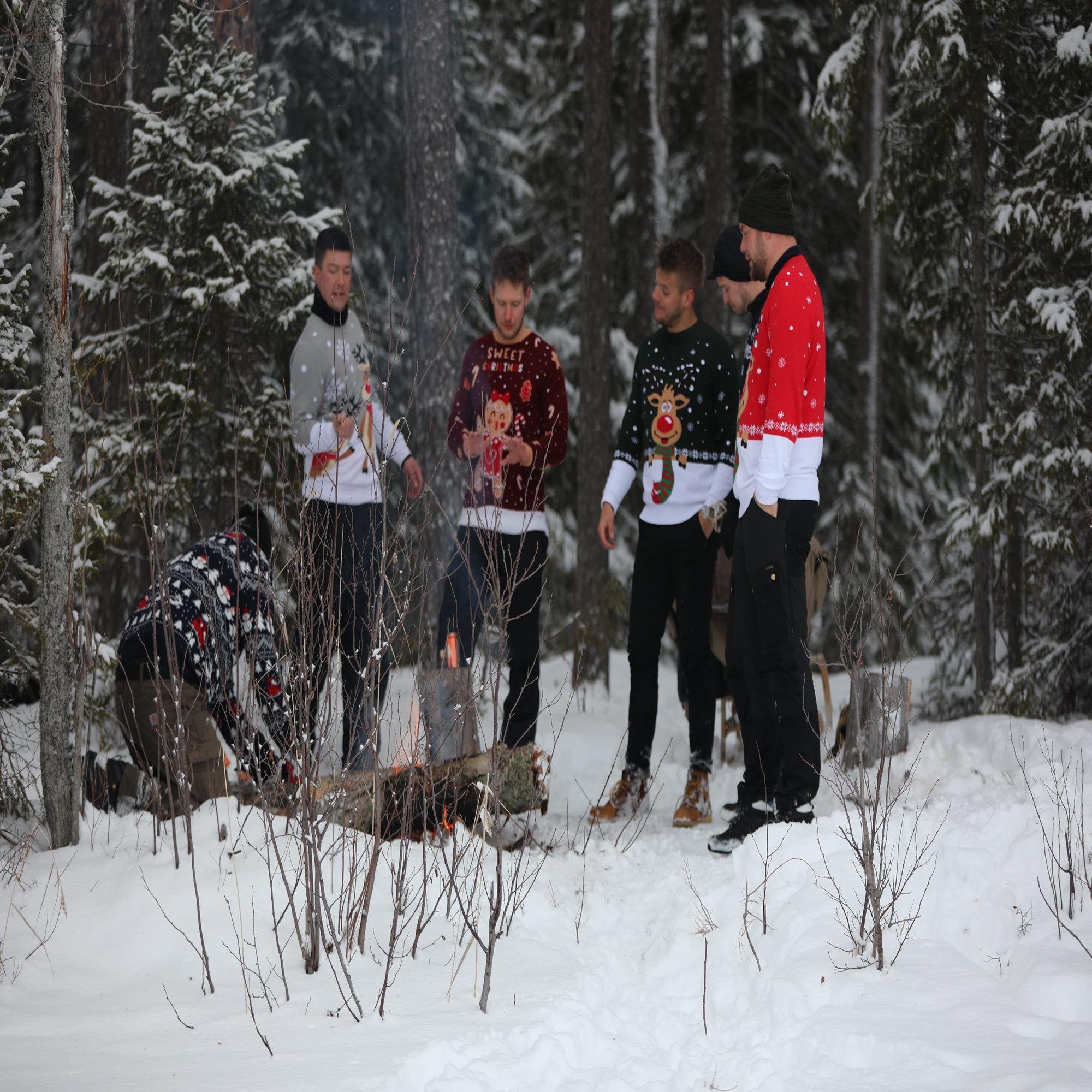
If a widespread white Christmas is unlikely where you live, there are small ways to keep holiday rituals intact: plan for outdoor picture opportunities where local elevations increase the chance of flakes, or create a wintry vibe indoors with matching Christmas pajamas for the family and a fun Christmas sweater for the main event. For gift ideas and festive outfits, consider a classic Christmas sweater, a playful ugly christmas sweater, or matching matching christmas pajamas to keep the mood bright regardless of the weather.
Kortvarig vejrudsigts overblik
De seneste korttidsmodeller peger fortsat på, at en landsdækkende hvid jul er usandsynlig i år. Meteorologiske vurderinger angiver tæt på nul procent sandsynlighed for kravene til landsdækkende sne ved 16.00 på juleaftensdag, mens temperaturerne typisk forventes at ligge omkring 0 til 4 grader. Der er fortsat plads til, at mindre, lokale snebyger kan opstå i de nordlige egne og over højere terræn, men disse hændelser vil ikke opfylde den officielle tærskel for landsdækkende dækning.
Historisk hyppighed og mønstre
På nationalskala er rene, landsdækkende hvide juleaftener sjældne. Statistikker viser ni tilfælde siden år 1900, hvor den seneste registrerede landsdækkende begivenhed fandt sted i 2010. Mellemrum mellem sådanne hændelser har i gennemsnit været lange, hvilket betyder at sandsynligheden i et givet år ligger i et enscifret procentinterval. Lokale hvide juleaftener optræder hyppigere, og flere år i nyere tid har budt på udbredt sne i dele af landet uden at nå landsdækkende dækning.
Klimaprojektioners betydning for sne og frost
Langtidsanalyser peger på markante ændringer i vinterklimaet frem mod år 2100. Modellering viser et betydeligt fald i antallet af sne- og isdøgn i en række scenarier, med eksempler der viser nedgang i gennemsnitlige sne dage fra cirka ni dage pr. vinter til under to dage i nogle projektioner. Antallet af isdøgn kan falde fra godt ti dages niveauer til kun et par dage i de kraftigste opvarmningsscenarier. Endvidere forventes antallet af fryse‑og‑optø passage at mindske, samtidig med at forekomsten af meget våde vintre i nogle vurderinger stiger markant.
Hvad betyder tallene for chancerne på kort sigt
De langsigtede ændringer ændrer baggrundssandsynligheden for sne, men vejrsystemer i dagene før juleaften afgør, om der falder sne i nogen områder. Derfor kan prognoser endnu ændre sig i den sidste weekend før højtiden. Hvis du planlægger udendørs aktiviteter, er det værd at følge opdaterede vejrudsigter tæt, fordi regionale lavtryk og luftmasser kan skabe overraskelser, selv når den nationale sandsynlighed er lav.
Forslag til visuelt indhold
Et simpelt diagram der viser antal landsdækkende hvide juleaftener pr. årti siden 1900 illustrerer tydeligt, hvor sjældne disse begivenheder er. En kompakt oversigt over centrale vintermålepunkter kombinere historisk baseline med projektionsintervaller kan give læseren et klart overblik uden at fylde for meget på siden.
Praktiske råd hvis sneen udebliver
Når landsdækkende sne er usandsynlig, er der flere måder at bevare julestemningen på indendørs. En simpel opgradering af aftenkoden kan hjælpe, for eksempel med en klassisk christmas sweater til familiearrangementet eller matchende nattøj til hyggelige morgener. For dem der vil gøre det legende, kan et sæt matching christmas pajamas samle familien om billeder og traditioner uden at vejret bestemmer.
Drivers of a white Christmas
Beyond longing and tradition, a few concrete meteorological ingredients decide whether snow will lie on the ground on Christmas Eve. First comes the temperature profile from the surface up through the lowest few hundred metres of the atmosphere. For snow to reach and remain on the ground, air near the surface must stay at or below freezing while precipitation falls. Second comes the timing of precipitation. A brief cold snap with dry air can produce crisp, powdery flakes that settle, while a milder layer aloft or warm sea temperatures can turn an expected snow event into rain before it touches the soil. Third comes ground warmth. Even shallow snow under 0.5 cm melts quickly if the soil has stored autumn heat.
The large-scale atmospheric patterns also play a decisive role. When blocking patterns lock cold continental air over the region, the chance of widespread snow rises. When the North Atlantic circulation directs milder maritime air inland, storms bring rain rather than flakes. These dynamics explain why forecasts can shift rapidly in the last days before the holiday; small changes in the track of a low pressure system can mean the difference between a dusting and a wash of rain.
Regional differences and what to expect
Not all corners of the country are equal when it comes to Christmas snow. Inland and northern districts historically see more localized snow, especially over modest elevations where cold pockets linger and showers can convert to snow. Coastal and southern areas are typically milder and more exposed to damp, maritime air, so snow that does fall struggles to persist.
Even where local snowfall feels likely, remember that nationwide coverage requires a very particular combination of timing, temperature and soil conditions. For many people, the more realistic chance is of a picturesque local snowfall rather than a countrywide white carpet.
How to read the probabilities and short-range updates
Think of long-term climate trends as the background music and short-term weather models as the conductor. Climate projections lower the baseline probability for snowy Decembers over decades. Short-range forecasts, updated daily and hourly in the final days before 24 December, determine whether the conductor brings out a snowy passage this year. Forecast probabilities can change substantially in the 48 to 72 hours before the event, so follow local updates closely if you hope to catch flakes.
Practical tip. If you want to maximise chances of a snowy moment, head to higher inland areas or the northern reaches when a cold front is forecast. If snow does not appear, you can still curate atmosphere with warm lighting, the smell of baking, and layered textures.
Wearing a cosy Christmas sweater while sipping gløgg or listening to gentle carols adds sensory warmth even without snow. For slow, hygge mornings, matching matching christmas pajamas are comforting companions and create memorable photos regardless of the weather. If you prefer a seasonal knit for the evening, consider a classic christmas sweater to bring that tactile sense of holiday togetherness.
Frequently asked questions
What exactly counts as a white Christmas?
A white Christmas here means at least 90% of the country covered by a minimum of 0.5 cm of snow at 16:00 on 24 December. That strict threshold is why nationwide events remain rare.
Is there likely to be a white Christmas this year?
Current national assessments indicate that countrywide snow cover is very unlikely. Local pockets of snow remain possible in northern and inland areas, but they seldom reach the 90% threshold.
How often has the country seen a white Christmas historically?
Nationwide white Christmases have been recorded only a handful of times over the last century, so they are rare events on the national scale.
How is climate change affecting the chances of snow at Christmas?
Long-term warming trends reduce the average number of snow days and ice days per winter, shifting the baseline toward milder and often wetter Decembers.
Which regions have the best chance for local snow on Christmas Eve?
Northern and inland regions show the highest historical probability of localized snowfall on Christmas Eve. Coastal areas are generally wetter and warmer.
Can the forecast change at the last minute?
Yes. Short-term weather developments in the days immediately before 24 December can alter the outcome significantly, so keep an eye on updated forecasts.
What are realistic expectations for the holiday period?
Expect a mild, often wet holiday period with low probability of countrywide snow. Create cozy indoor rituals, layer up in a beloved Christmas sweater, and plan short outings to higher ground if you hope to catch flakes.
Also view
15 January 2026
Picture a small family movie night by the tree: soft lights, low conversation and a stack of options for christmas movie recommendatio...